
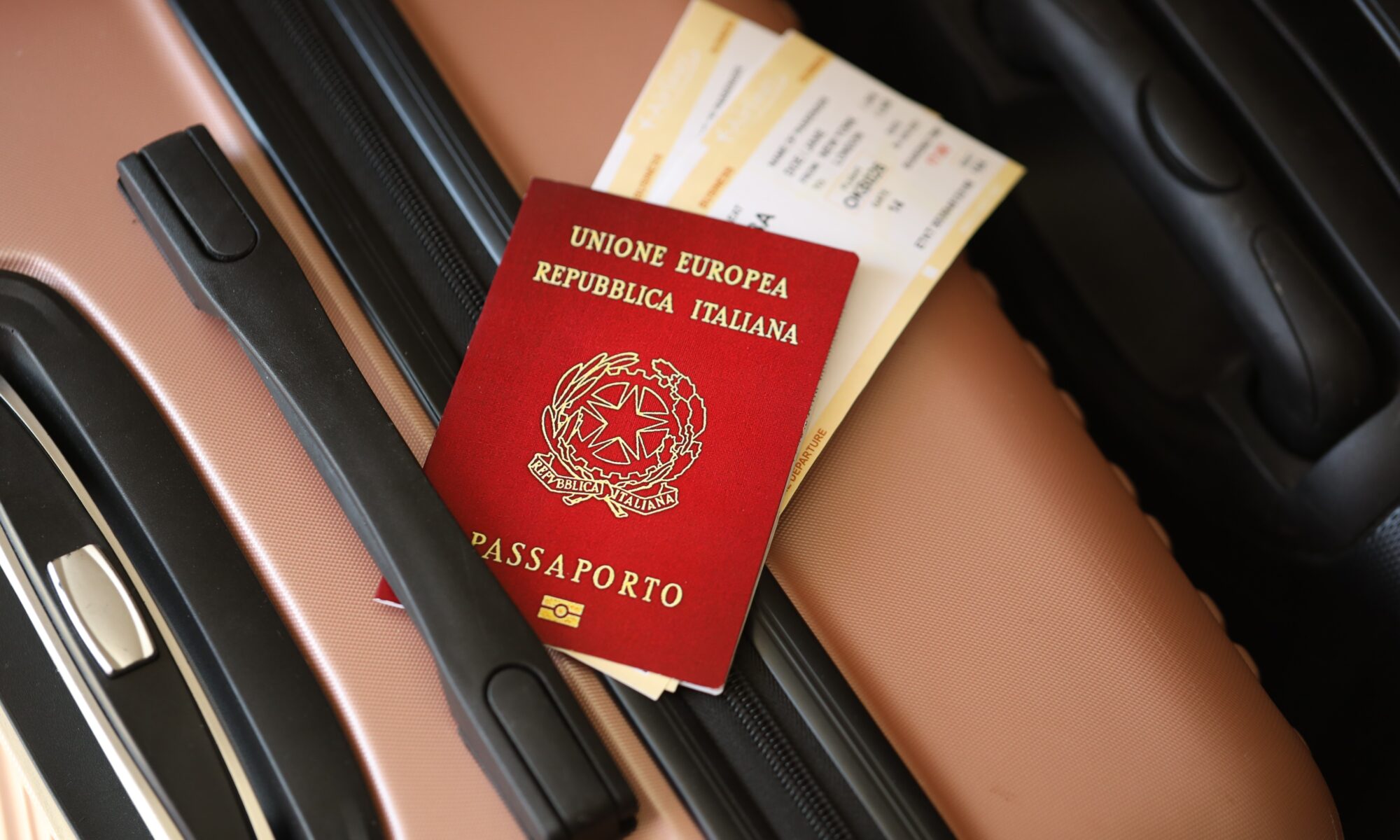
New York has never been gentle with language. It refines it through pressure, speed, and expectation. Here, words are not admired for their elegance alone. They are measured by what they accomplish. Italian and English have been tested side by side in this city for generations, not in salons or classrooms, but in offices, courtrooms, workshops, publishing houses, and negotiating rooms where outcomes mattered. Our high-end translations from Italian into English and from English into Italian are shaped for New York clients who know that language, here, must deliver results.
Italian arrived in New York with paperwork in hand. It traveled through customs declarations, merchant correspondence, labor agreements, technical drawings, and notarized statements long before it entered popular imagination. Translation became part of daily survival. People needed leases understood, wages clarified, property registered, and obligations spelled out across legal systems that did not speak the same language. Translators were trusted figures, even when they remained invisible, because accuracy meant stability. That practical, unsentimental origin still defines what serious Italian-English and English-Italian translation looks like in New York today.
Our work is built for a city that reads critically. New York clients are accustomed to documents that circulate quickly and are scrutinized closely. They expect language that is composed, reliable, and fit for purpose. Translating between Italian and English at this level requires more than linguistic proficiency. It demands an understanding of how meaning operates within American professional culture and how Italian structures, reasoning, and tone must be adapted to function convincingly in that environment.
Italian-to-English translation often begins with recalibration. Italian writing tends to favor formal development, layered argumentation, and syntactic complexity. American English, especially in business and legal contexts, privileges clarity, hierarchy, and efficiency. Our translations do not flatten Italian texts, but they reorganize them so the logic unfolds clearly for an American reader. Legal translations demonstrate this approach in full. Contracts, pleadings, corporate charters, and regulatory filings are translated by reconstructing intent within the conventions of U.S. legal English. We account for differing legal concepts, align terminology precisely, and ensure that obligations and rights are expressed without ambiguity. In New York, a single poorly framed sentence can become a sticking point, and we do not leave loose threads.
Commercial and financial translations receive the same level of scrutiny. Business plans, investor presentations, due diligence reports, compliance documentation, and internal governance texts must function in an environment where credibility is fragile and attention spans are limited. We handle intricate financial language, cross-border corporate structures, and reporting standards with exactness. The language is controlled, deliberate, and transparent, because in New York, trust is earned incrementally and lost quickly.
Editorial and cultural translations call for a different sensibility. Italian essays, academic papers, exhibition texts, and narrative nonfiction often rely on rhetorical pacing and intellectual layering. When translating into English, we preserve analytical depth while adjusting structure and tone to suit American reading habits. The prose remains serious and engaged, but it sheds unnecessary density. The result is writing that invites attention rather than demanding it, an important distinction in a city where readers are selective.
Translating from English into Italian presents its own challenges. New York English is often compressed and pragmatic, built around implication and shared context. Italian readers expect arguments to be fully articulated and connections made explicit. Our translations expand and refine the source text where needed, ensuring coherence and tonal consistency. Marketing materials are adapted to sound authoritative rather than slogan-driven. Institutional and corporate communications are reshaped to feel deliberate and credible. Technical manuals and policy documents are translated with precision, ensuring that instructions and obligations are unmistakable.
The everyday life of New York continues to produce translation needs that are personal and consequential. Real estate transactions involving Italian buyers or sellers, inheritance matters, family law documents, court submissions, academic equivalency evaluations, and sworn statements all require meticulous care. These texts often intersect with formal procedures and legal deadlines. We approach them with patience and attention, verifying details because an overlooked nuance can trigger delays or disputes. Our clients rely on us to be thorough, not hurried.
New York’s unique density of industries also shapes translation practice. Italian companies work with New York partners in fashion, architecture, finance, art, food, technology, and real estate, often simultaneously. Each field carries its own linguistic conventions. A licensing agreement for a fashion label must balance legal rigor with brand voice. An architectural proposal requires technical clarity alongside conceptual explanation. A museum catalog demands intellectual precision and stylistic restraint. We adapt our translations to these contexts, ensuring that language supports the project rather than competing with it.
Our stylistic approach reflects New York’s temperament. The city values competence over ornament. We use a wide and precise vocabulary, selecting uncommon adjectives only when they add control or nuance. Sentences are allowed to carry complexity, but they remain navigable. We avoid excess and resist the temptation to over-polish. The goal is writing that feels settled and confident, not performative. In New York, understatement often signals authority more effectively than flourish.
Idiomatic command is part of that balance. We understand how idioms in American English can signal familiarity and confidence when used sparingly. At the same time, we know that an ill-timed expression can muddy meaning or undermine seriousness. We use idiomatic language with restraint, knowing when to keep things on an even keel, when not to split hairs unnecessarily, and when to cut to the chase. This sensitivity ensures that the translation sounds natural without becoming casual or imprecise.
What distinguishes our Italian-English and English-Italian translations is judgment shaped by experience. Translation at this level involves constant decision-making. Every word choice carries implications for tone, clarity, and reception. We consider who will read the text, under what circumstances, and with what expectations. A document intended for negotiation requires a different voice from one intended for publication or compliance review. We tailor each translation to its real-world function, not to theoretical ideals.
Italian and English have long coexisted in New York as working languages. From early commercial exchanges to contemporary global partnerships, translation has been part of the city’s infrastructure, quietly enabling cooperation across borders and systems. Our work continues that tradition with seriousness and care. We provide language that supports decisions, facilitates understanding, and stands up to scrutiny.
For New York clients seeking Italian-English or English-Italian translations that meet the city’s demanding standards, our services offer depth and reliability. We do not rely on shortcuts, templates, or automatic solutions. We rely on careful reading, disciplined writing, and respect for language as a tool that must perform. In a city where words are constantly tested, we make sure they are equal to the task.