
New York has always demanded fluency, not just in language, but in intention. Here, words are currency. They circulate through zoning hearings and startup demos, through gallery openings and hospital intake desks, through brokerage statements and family emails written between time zones. Russian and English have shared this terrain for generations, not politely, but productively. Translation in New York has never been an academic abstraction. It has been a working craft shaped by urgency, ambition, and the city’s intolerance for half measures.
Our Russian–English and English–Russian translation services are designed for people who operate in that environment every day. We work for clients who know that a document can be the thin line between momentum and delay, trust and doubt, progress and deadlock. In this city, there is no such thing as a neutral text. Everything does something. Our job is to make sure it does exactly what it should.
Russian arrived in New York not as a curiosity, but as a necessity. Early community organizations, mutual aid societies, and trade groups depended on translation to deal with city authorities and commercial partners. Later, as Russian-speaking professionals established themselves in architecture, medicine, finance, and higher education, translation followed them into more rarefied spaces. The work became quieter, more exacting, and less forgiving of error. A mistranslated phrase could stall a transaction or undermine credibility. Over time, standards hardened. Only translations that could stand scrutiny survived.
That history informs how we approach translations from Russian into English today. We do not treat English as a dumping ground for meaning extracted from Russian. We write English that sounds deliberate, informed, and context-aware. Russian texts often tolerate abstraction and extended argumentation. English readers in New York expect structure, hierarchy, and forward motion. We reorganize where necessary, clarify without oversimplifying, and preserve emphasis without excess. The result is English that feels composed rather than translated, capable of carrying weight without sounding strained.
This matters most in legal and regulatory contexts, where New York sets the bar high. Translating legal documents is not a matter of vocabulary alone. It involves understanding how obligations are framed, how responsibility is assigned, and how ambiguity is handled in practice. We translate contracts, litigation materials, compliance documentation, and regulatory correspondence with an eye toward how they will function once they leave the page. Every term is tested for consistency. Every sentence is evaluated for risk. There is no room to skate by on technical correctness alone.
Our English-to-Russian translations are guided by an equally pragmatic sensibility. American English often leans on brevity and shared context, particularly in corporate and institutional writing. Russian professional language expects a clearer articulation of logic and intent. We bridge that divide carefully. Strategic plans, internal policies, board materials, and external communications are rendered into Russian that sounds confident and complete, not clipped or evasive. We make sure the Russian text communicates not just information, but priorities and assumptions that would otherwise be lost in transit.
New York’s economic life has long depended on Russian–English translation in finance and commerce. From early import-export businesses to modern investment vehicles, financial language has crossed between these languages under constant pressure. Financial translation is unforgiving. Terminology must be precise, tone calibrated, and internal references aligned across documents. We translate prospectuses, financial statements, due diligence materials, and banking correspondence with an awareness that these texts are often read defensively. The language must be airtight. There is no margin for casual phrasing or interpretive drift.
Academic and technical translation represents another thread in New York’s linguistic fabric. The city’s universities and research institutions have long attracted Russian-speaking scholars whose work needed to circulate in English, just as American research has traveled into Russian-speaking contexts. Translating academic articles, technical specifications, and research proposals requires discipline. Arguments must remain intact. Terminology must be consistent. Style must match disciplinary expectations. We take care not to flatten complexity or introduce noise. The goal is fidelity with fluency, not simplification for its own sake.
Cultural translation has followed a different path in New York, shaped by publishing houses, theaters, and intellectual circles that introduced Russian voices to English-speaking audiences. Translating essays, memoirs, and literary nonfiction requires sensitivity to register and subtext. Humor, restraint, and irony cannot be forced. We approach these projects with patience, knowing when to stay close to the source and when a more adaptive solution will keep the text alive. When done well, the translation disappears and the reader meets the author directly.
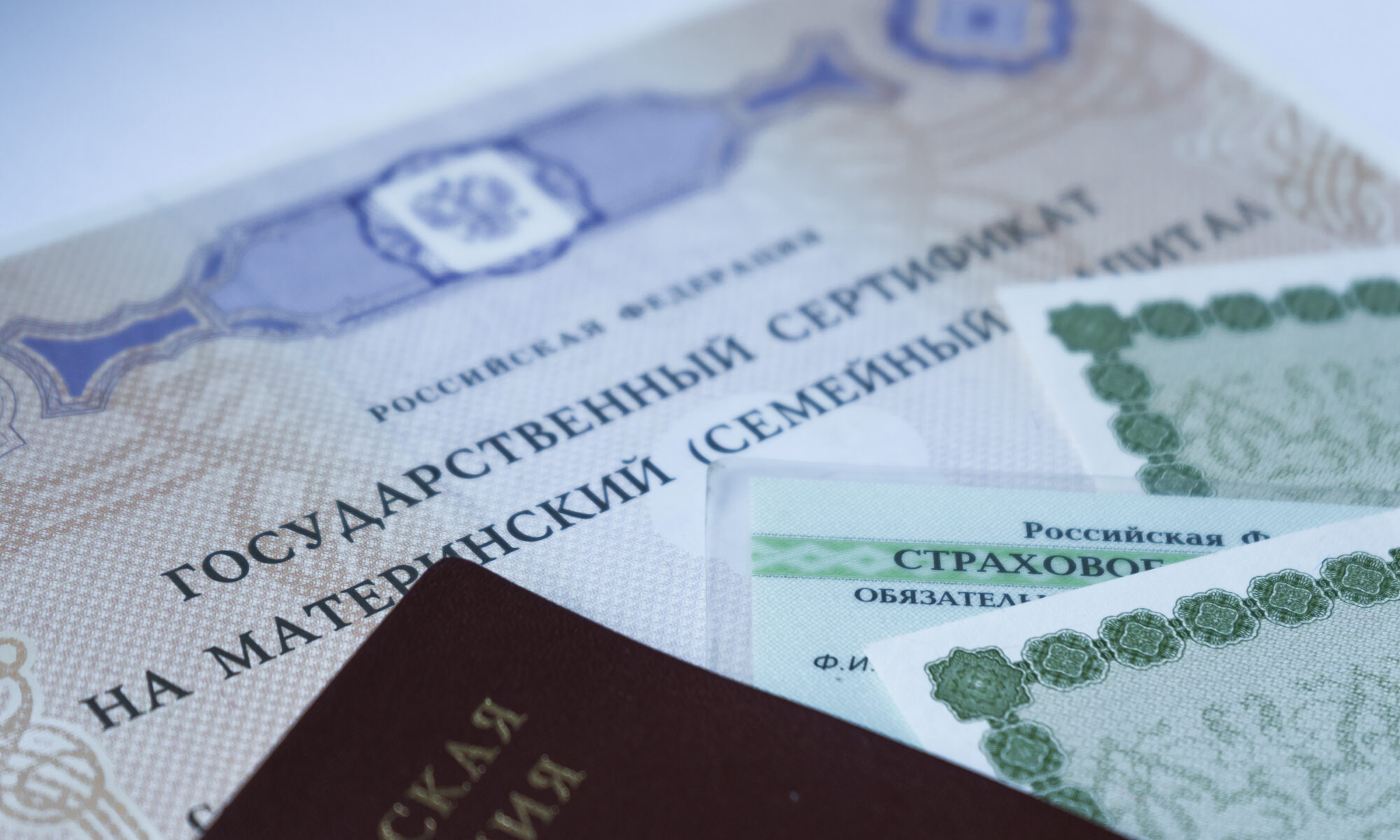
Everyday translation needs continue to anchor this work in lived reality. Immigration files, educational records, employment histories, and medical documentation are not glamorous, but they matter. These texts often determine access to services, opportunities, or care. We translate them with clarity and restraint, avoiding unnecessary ornamentation and focusing on accuracy. A small mistake in this context can ripple outward, so we treat even the most routine documents with attention and respect.
What distinguishes our approach is an understanding of how New York listens. This is a city that cuts through pretense quickly. It rewards language that is purposeful and penalizes language that wastes time. At the same time, New Yorkers notice quality. They may not comment on it, but they respond to it. Our translations are built to meet that expectation. They are composed with care, but they do not call attention to themselves. They do their job and get out of the way.
Clients often come to us after discovering that a translation that seemed serviceable did not hold up under real use. A phrase raised questions. A tone undermined authority. A technical term turned out to be wrong in context. By then, they were already behind the eight ball. We take a preventative approach. We read critically, revise thoroughly, and test the text against its intended use. We would rather sweat the details early than scramble later.
New York moves fast, but it has a long memory. A well-executed document can open doors for years. A flawed one can linger uncomfortably. Translation sits squarely at that intersection. When it works, it enables action without friction. When it fails, it becomes an obstacle no one anticipated. We make sure our translations support momentum rather than slowing it down.
Our Russian–English and English–Russian translation services are crafted for New York’s pace, standards, and history. They reflect a deep understanding of how these languages have interacted in the city’s professional and everyday life. Each project is treated as a distinct problem, approached with judgment rather than formula. We do not rely on shortcuts. We rely on clarity, consistency, and an insistence on doing the work properly. In a city where words are expected to pull their weight, that makes all the difference.